What Glitr is

Glitr is a private messenger. You chat with people you already trust. There is no Glitr account, no phone-number directory, and no central server that holds your conversations for you.
History starts on this device. Optionally you attach a git repository you control — that repository becomes your mailbox, your backup, and an address other people can use to reach you when you are offline. Their repository is theirs. Glitr reads and writes those repositories from your device, with encryption in between.
The idea in one minute
- You open Glitr and Start on this device (encryption password only), or connect one HTTPS git remote if you already have a mailbox.
- You set a display name and handle.
- You meet someone: Pair now (QR / paste / NFC) for an instant live link, or exchange repository URLs and add each other as git contacts.
- You send a message — or a file. On a live link it travels peer to peer (files are sealed, then chunked). On the git path, Glitr writes an encrypted payload (text, and attachments when you attach one) into your repository and pushes it; their app fetches your repository when they next poll. Voice and video use the live link only.
- If you started local-only, you can attach remotes on Profile later so the same history has an off-device backup.
That is the whole product: a messenger that can stay on the device, or use a repo you already know how to own.
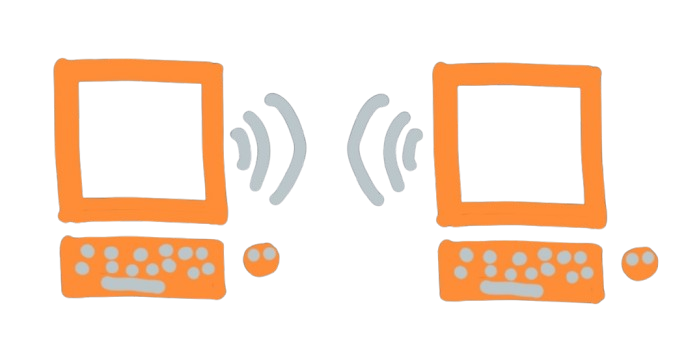
Two tracks
| Track | What you need | How you meet | If the other person goes offline |
|---|---|---|---|
| Talk now | Encryption password | Pair now | Delivery stops until you are both Live again |
| Own a mailbox | HTTPS git remote + token | Git URL contact | Git push / poll still delivers |
Both tracks use the same chats, contacts, and profile chrome. You can attach a mailbox after you started local-only.
What you get
- Chats — a list, threads, unread badges, and delivery ticks (sent, delivered, read).
- Contacts — people you added by live pair or by the git URL they gave you, with a connection status (pending, active, live).
- Profile — your name, handle, and (when attached) the git remotes you copy, attach, or remove.
- A progressive web app — install it on a phone or desktop from the browser; it keeps working after the first visit.
- Desktop and mobile builds — the same app, packaged, if you prefer a window instead of a tab.
- Encryption — sealed data at rest (Argon2id then AES-GCM), a recipient cascade (AES → Signal → PQXDH, then RSA hybrid → ML-KEM), and a Signal Protocol handshake library that is open source.
- Live when you can — Pair now or git-brokered signaling; a direct link carries messages, files, and voice or video while both sides are present.
- Groups — a thread that fans out one encrypted copy to each member's mailbox. There is no shared group repository.
What Glitr is not
- Not a company inbox. We do not store your thread on our servers. If you lose the only copy (local-only with no remote, or the repository and the password), we cannot restore the conversation.
- Not anonymous-by-magic. A git host can see that a repository exists and is being updated. Encryption hides message bodies; it does not hide the fact of traffic. See What is encrypted vs what a host can see.
- Not guaranteed instant. Offline delivery waits on git fetch and push. Instant is the live path, when both of you are here. See Live vs offline.
- Not a git host of our own. When you use the mailbox track, you bring the repository. Some hosts may dislike this use of their service. Read Using GitHub, GitLab, and Codeberg.
Who it is for
People who want messaging that does not depend on a chat company remaining solvent, honest, or online. People who will start on a device and optionally learn a repository URL and an access token. People who will trade a little setup for history they can clone, backup, and delete themselves.
If that is you, start with Install the app, then either Talk now or Your first conversation.